


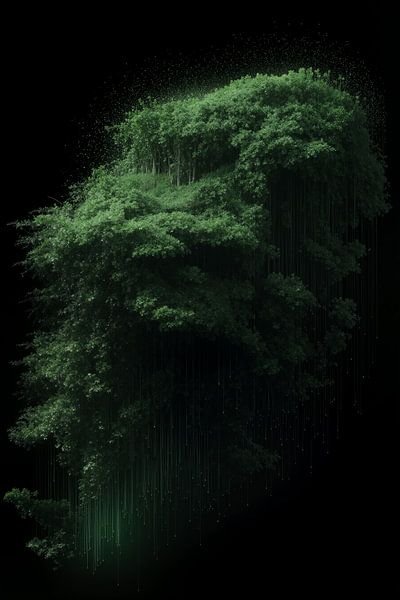
Glitch art takes the visual language of digital failure – corrupted files, datamoshing, scan lines, broken pixels – and uses it on purpose. The error stops being a bug and becomes the composition. I work in one strand of it called glitchcore: green and black, monochrome, with figures and landscapes coming apart into streams of code.
What is glitch art?
Glitch art makes digital errors the point of the picture. Artists corrupt a file on purpose, push video codecs until they smear, or bend raw data until the image tears. The damage is the medium.
It’s been around as long as the machines that misfire. Early on it was accidental – a corrupted JPEG, a game cartridge pushed too far. Then people started causing the errors deliberately and composing with them.
The appeal is simple. A glitch carries the fingerprint of the system that made it, so the image feels native to screens and code rather than to paint and canvas.
How is glitchcore different from glitch art?
Glitch art is the whole field. Glitchcore is one mood inside it, darker and built around dissolution.
In my glitchcore work the palette stays green and black, and the subject is usually a figure or a landscape coming apart into code. A face surfaces out of digital noise. A forest breaks into falling characters. The glitch is the substance here, and the subject is built out of the corruption itself.
That green-on-black look has a clear ancestor in the code-rain of early hacker and cyberpunk visuals. Glitchcore points it at identity and nature instead of at city streets.
Glitch art, glitchcore, and vaporwave: how they differ
People mix these up, so here’s the short version.
| Style | Core idea | Palette | Feel |
|---|---|---|---|
| Glitch art | Digital errors used on purpose: datamoshing, databending, corrupted files | Whatever the source breaks into | Unstable, raw |
| Glitchcore | A darker strand: figures and landscapes dissolving into code | Green and black, monochrome | Brooding, mysterious |
| Vaporwave | Retro digital nostalgia, 80s and 90s interfaces and chrome | Neon, pastels, electric pink and blue | Dreamy, nostalgic |
Glitch art in my own work
The clearest examples are 3 glitchcore pieces in the Surrealism collection. A newer one, Event Horizon Protocol, takes the same idea, the edge between order and breakdown, and points it at deep space instead.

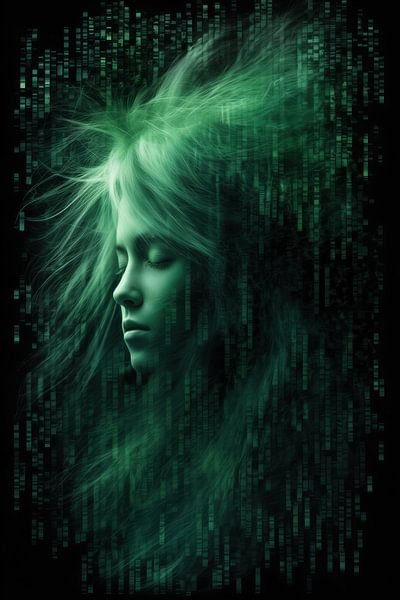
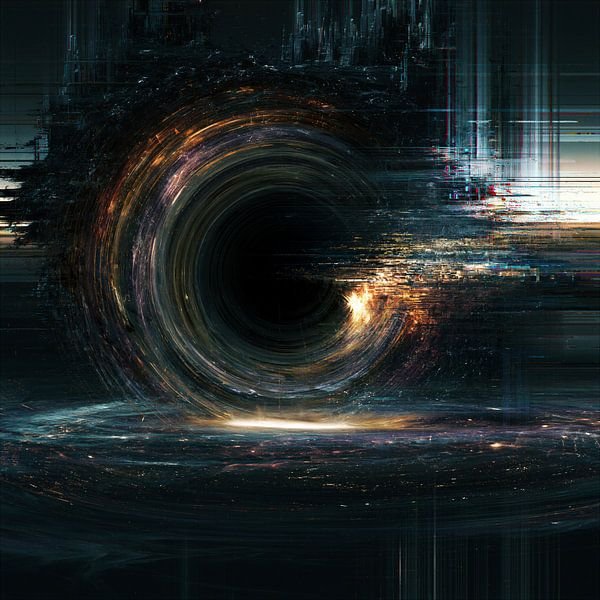
They suit darker, moody walls and they sit well near screens. A home office, a gaming setup, or a living-room corner that can take something brooding. The black background keeps them from fighting a monitor next to them.
Glitch art: FAQ
What is glitch art?
Glitch art uses digital errors as the actual content of the image. The artist causes the damage on purpose, by corrupting files or datamoshing, and composes with it, so the failure of the system becomes the picture.
Is glitchcore the same as glitch art?
Glitchcore is the darker, green-black strand of glitch art, focused on figures and landscapes dissolving into code. It’s one mood within the wider practice of making art from digital errors.
What colours is glitchcore?
In my work it stays green and black, a monochrome code-rain look. The green ties the subject and the corruption into one surface against a dark background.
Where does glitch art look good in a room?
On darker or moody walls, and near screens. A home office, a gaming setup, or a living-room corner that can hold something brooding. The black backgrounds keep it from clashing with monitors.
Are the pieces original?
Yes. Each is an original Hive Arts Studio design, made with a mix of techniques and printed to order. The works are not available for royalty-free use.
In short: glitch art makes the error the art, and glitchcore is the green-black, code-heavy corner of it I keep coming back to. If that pulls you in, the Surrealism collection is where these pieces live.
See the glitchcore pieces
The green-black, code-dissolving work lives in the Surrealism collection.